
Barbell bench press: complete technical breakdown
The barbell bench press is one of the most popular and most commonly misperformed exercises in the gym. While it may look simple, a proper bench press is a full-body lift, not just a chest exercise. Correct technique improves strength output, maximizes muscle engagement, and significantly reduces stress on the shoulders, elbows, and lower back.
Below is a step-by-step guide to help you bench press safely, efficiently, and with purpose.
Setup
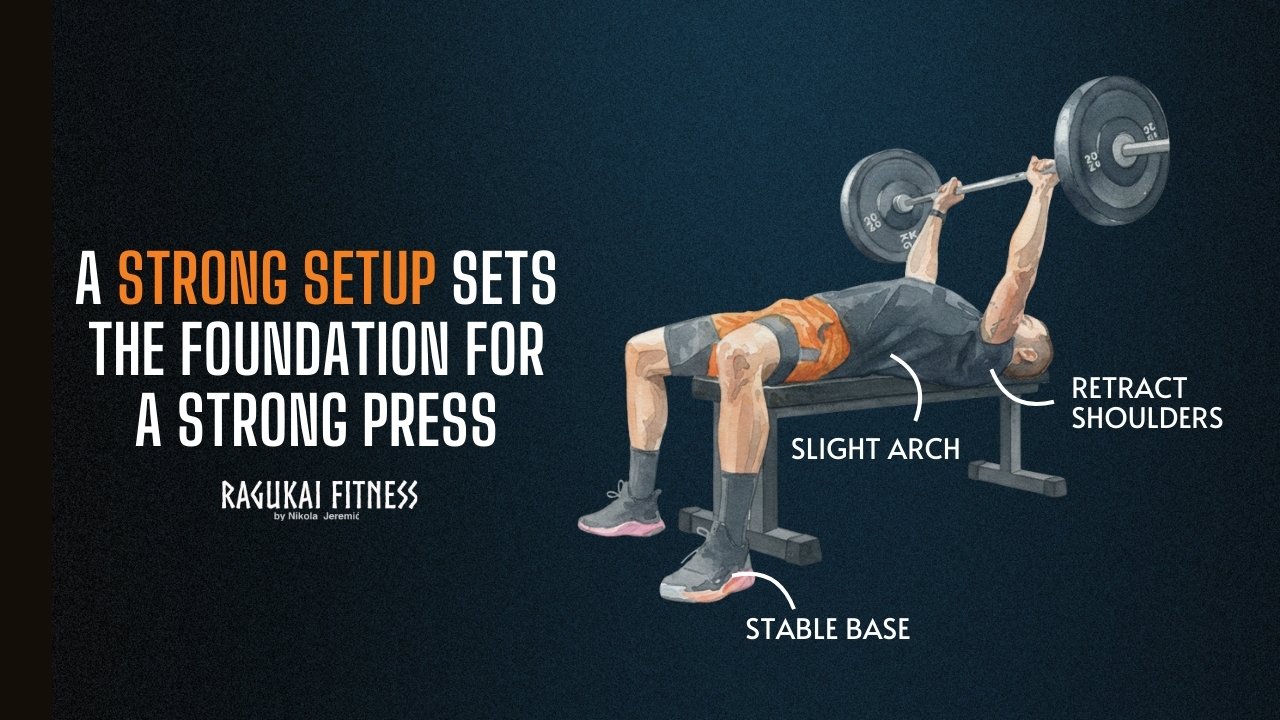
Feet firmly planted on the floor, about hip-width apart, creating a stable base.
Glutes remain in contact with the bench throughout the entire lift.
Maintain a slight, natural arch in the lower back — avoid excessive bridging.
Retract and depress the shoulder blades to create a tight, stable upper back.
Keep your head, shoulders, and upper back in contact with the bench.
Brace your core before unracking, as if preparing for impact.
Grip
Grip the bar slightly wider than shoulder-width.
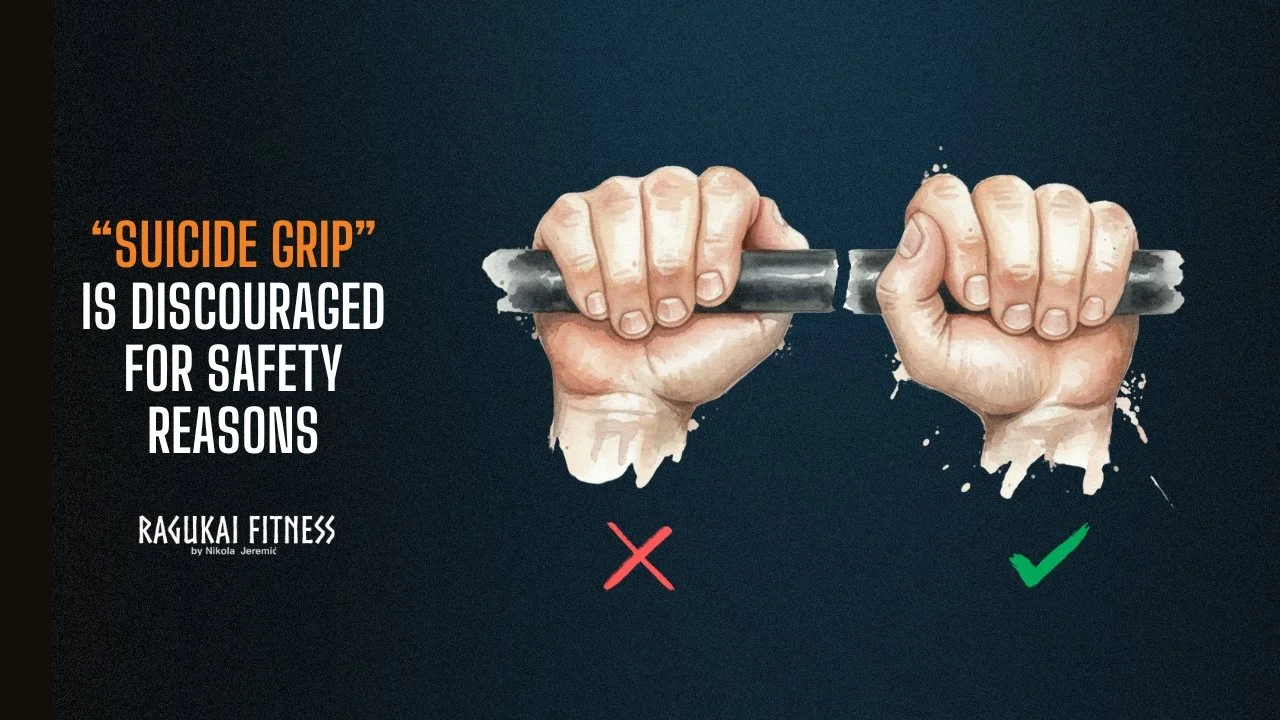
The bar rests in the base of the palm, keeping the wrists neutral and stacked.
Forearms should be vertical when viewed from the front.
Use a full, closed grip around the bar.
Unracking the Bar
Take a deep breath and brace your core.
Press the bar horizontally out of the rack, not straight upward.
Position the bar directly over the mid-to-lower chest line (around nipple level).
Stabilize the bar before initiating the descent.
Descent (eccentric phase)
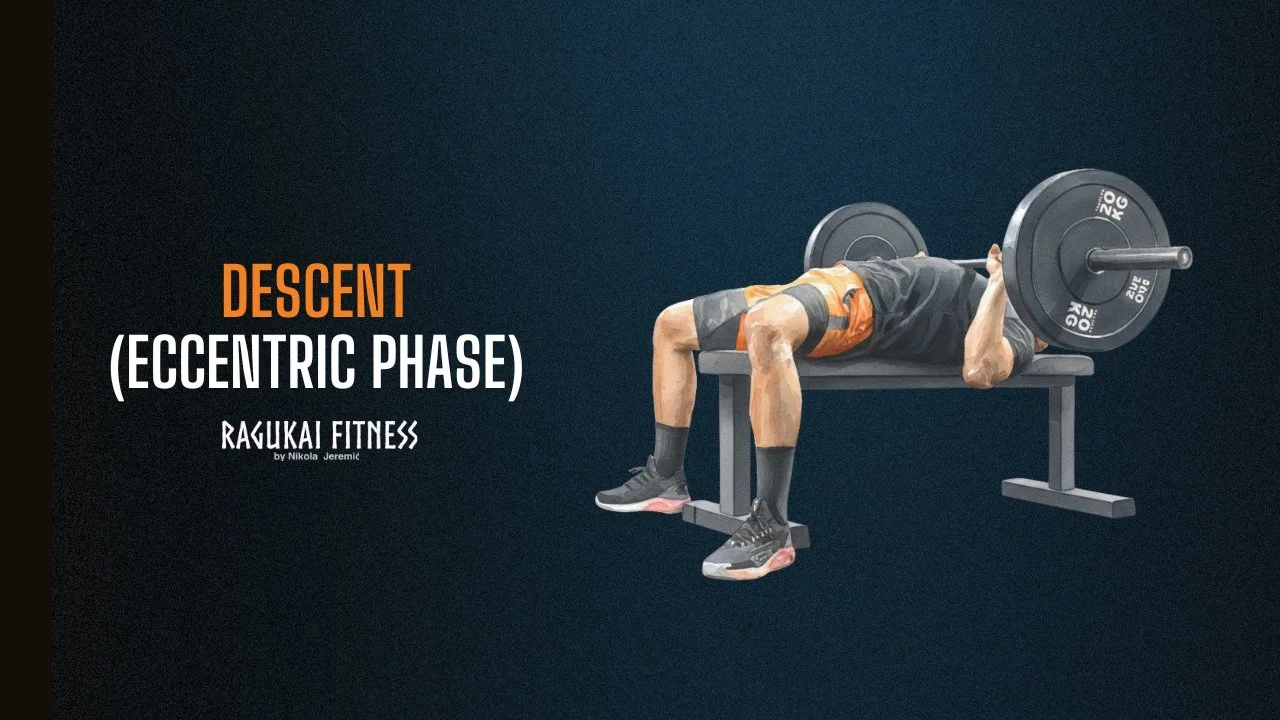
Lower the bar in a controlled 2-3 second descent.
Keep elbows at approximately a 45-70° angle relative to the torso.
Guide the bar toward the lower chest, not the neck.
Maintain scapular retraction and upper-back tightness throughout.
Keep forearms vertical as the bar travels downward.
Bottom position
The bar lightly touches the lower chest - no bouncing.
Wrist, elbow, and forearm remain aligned and stacked.
Core stays braced and upper back remains locked in position.
Ascent (concentric phase)
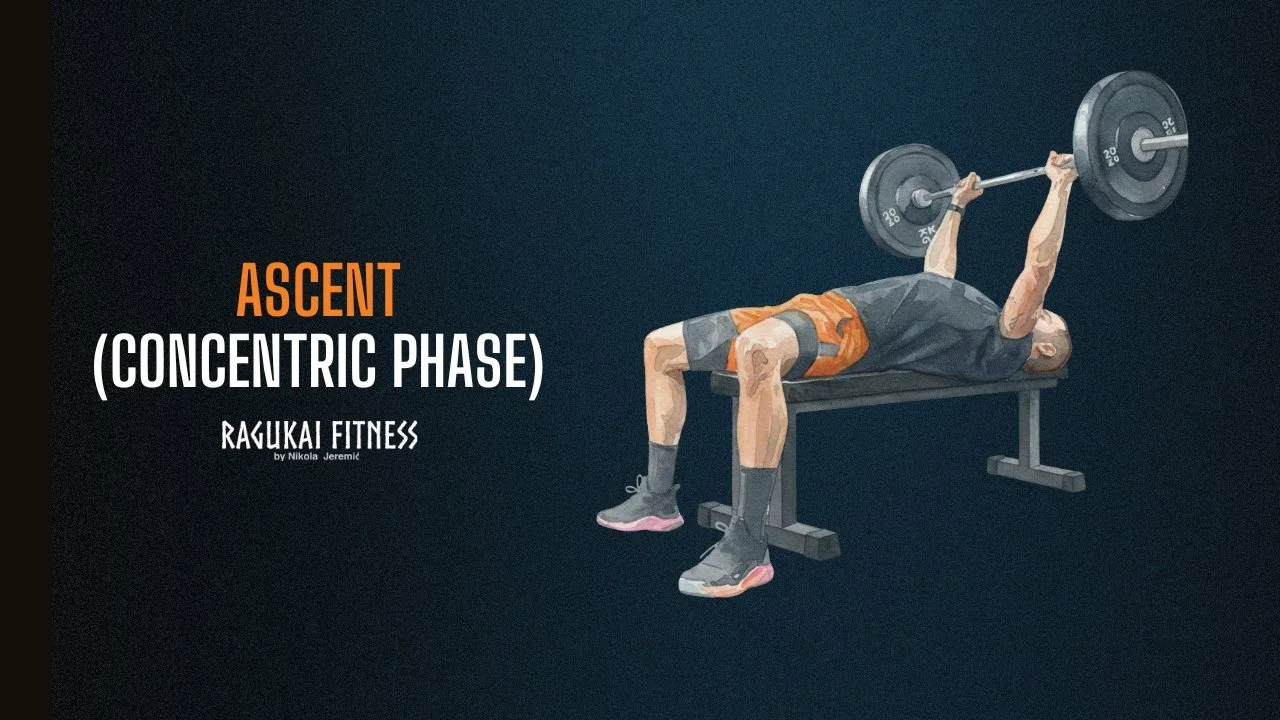
Press the bar upward explosively but under control.
Follow a natural J-curve bar path - slightly back toward the rack, then up.
Maintain elbow position; avoid excessive flaring.
Finish with the bar over the mid-chest, arms locked out without hyperextending the elbows.
Breathing
Inhale deeply during the descent.
Exhale as you press the bar upward, or maintain bracing with a controlled exhale at lockout.
Common Mistakes
Elbows flared excessively (90° or more).
Feet shifting or heels lifting during the press.
Losing scapular retraction, causing shoulders to roll forward.
Excessive lower-back arching.
Lowering the bar too high toward the neck.
Conclusion
A strong bench press isn’t about moving the most weight, it’s about moving weight well. When your setup is solid, your bar path is efficient, and your body stays tight, strength increases naturally while injury risk decreases. Master the basics, respect the details, and let consistency do the rest.

Ready to start?
If you’re done with excuses, done with guessing, and ready to take control of your body and lifestyle…
Let’s begin.
Your transformation starts the moment you decide to take the first step.
